
How to install a mini split, from the tech who does it every week.
These guides are written by working HVAC techs who install ductless systems for a living. You can do it yourself with the right steps, or you could have it done for you.
The install, in the order it happens
Every ductless install follows the same eight steps. If you skip one, you will find out a few months later.
-
1
Pick the spots
Put the indoor head high on an outside wall, and put the outdoor unit on a level pad with airflow around it. The length of the line set between them matters a lot.
-
2
Mount the bracket
Find the studs, tape up the paper template from the box, and level the plate before the last screw goes in.
-
3
Drill the wall
One hole, sloped down toward the outside so condensate drains and rain doesn't come in.
-
4
Run the line set
Copper, drain and communication wire go through together. Gentle bends, no kinks.
-
5
Flare and torque
You need a clean 45° flare, and you need the torque that the manual shows. This is where most leaks start.
-
6
Pressure test
Dry nitrogen to the test pressure in the manual, then soap every joint.
-
7
Pull a vacuum
Below 500 microns, then isolate the pump and watch it hold.
-
8
Open the valves
You will release the charge, cap the valves and run it in cool and heat.
Guides
This is written for homeowners. Nothing here assumes you already own a flaring tool.
-
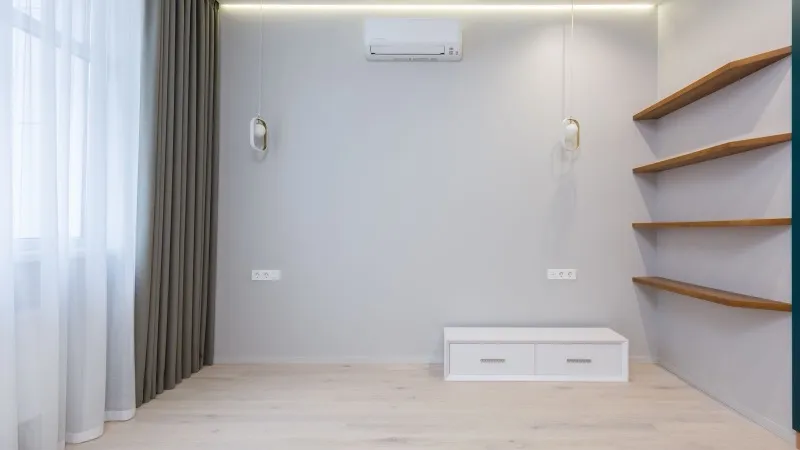 How to install a mini split, start to finish
The whole job in the order we do it on a real install, from picking the wall to the first startup.
1 to 2 days on the jobModerate, gauges needed
-
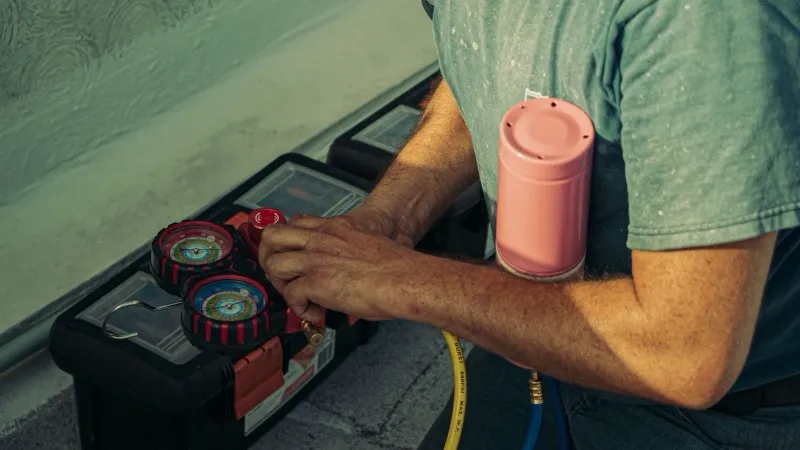 How to flare a mini split line set
Cut, ream, flare, check, and torque. The connection that causes more callbacks than anything else on a ductless install.
20 to 40 minutes on the jobModerate
-
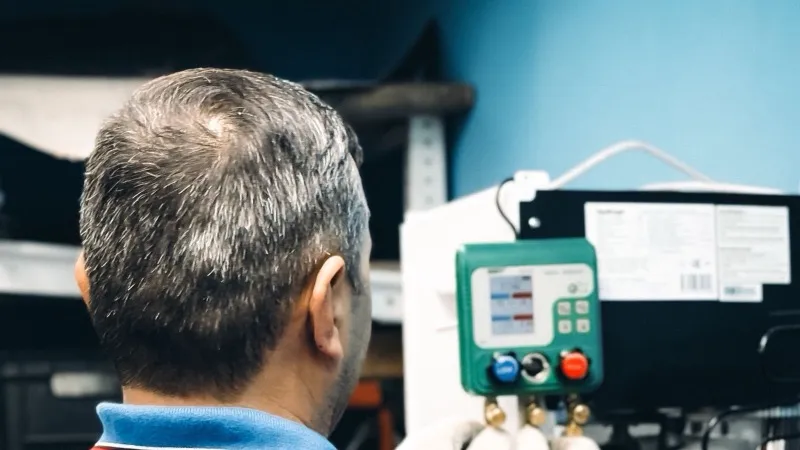 How to vacuum a mini split
Pull the line set below 500 microns, prove it holds, then release the charge. Why the micron gauge matters more than the pump.
45 to 90 minutes on the jobModerate
Where DIY usually stops
Plenty of the job is fair game for you if you are handy. A few parts aren't, either because of the law or because of the warranty.
Most people can handle
- Mounting the wall bracket and indoor unit
- Drilling the wall and running the line set through it
- Putting the outdoor unit on a pad or wall bracket
- Installing a pre-charged, quick-connect kit the way its manual says
Get a pro for
- A new 230V circuit and disconnect, unless you are qualified for electrical work
- Opening a sealed refrigerant system or adding refrigerant (this needs EPA 608 certification)
- Flare-type systems that need a licensed installer for the warranty
- Line sets that are longer than what the factory charge covers
Rather have it done right the first time?
We install mini splits in Madison and about 40 miles around it. Flares torqued to spec, pressure tested, pulled to vacuum, and started up with you watching.