
Senville DIY Multi-Zone Mini Split Installation Warranty: A Complete Guide
Installing a multi-zone mini split yourself can save thousands of dollars in labor costs.
- Written by
- A working HVAC tech
- Updated
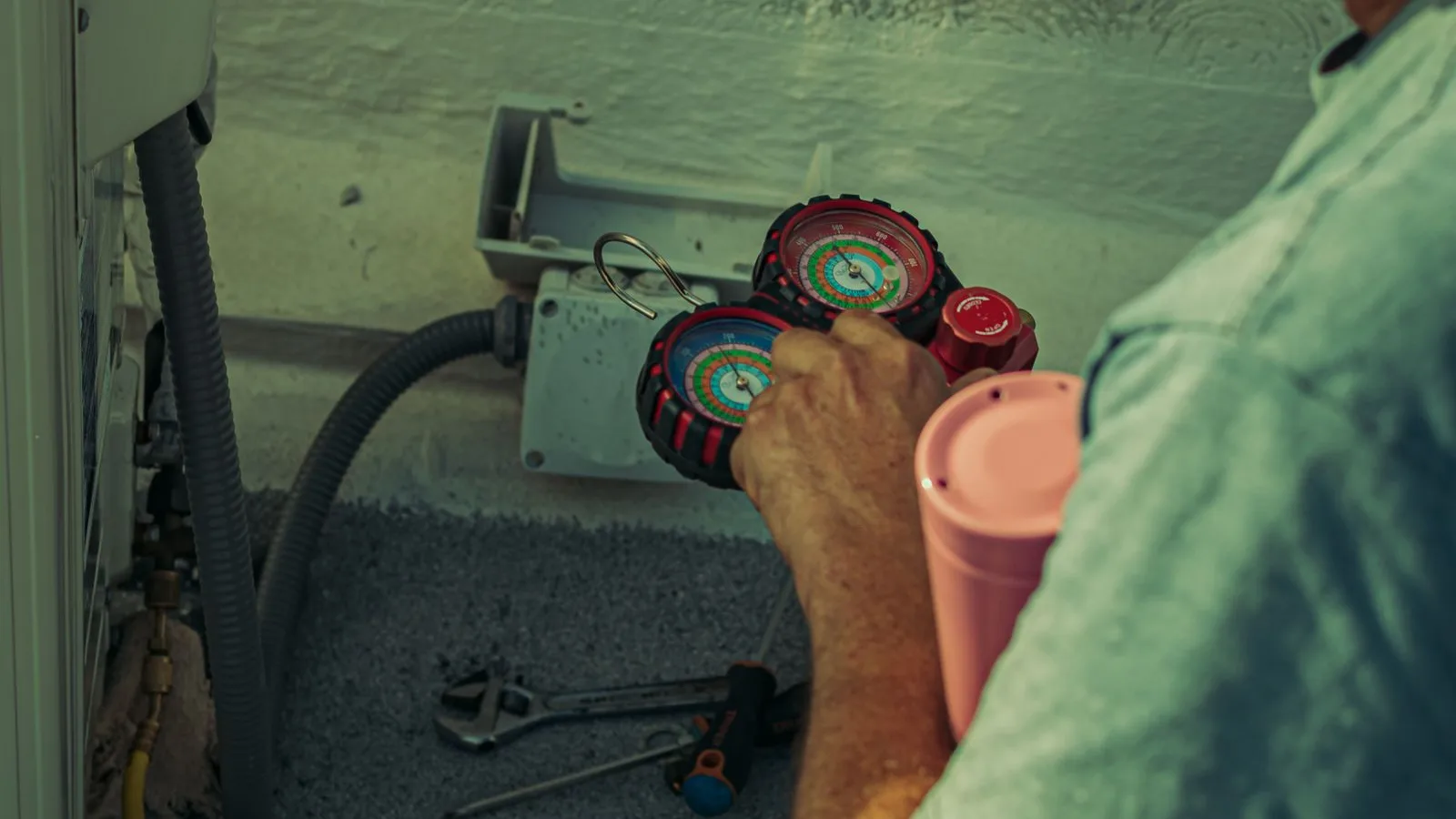
But if the brand you choose doesn't honor its warranty after a DIY installation, those savings can evaporate the moment a compressor fails or a control board dies. In this post, we break down what happens to your Senville mini split warranty when you install the system yourself, what documentation Senville requires, and how Zone Air compares as the best DIY mini split brand for homeowners who want warranty protection without hiring a contractor for every step of the process.
Senville Mini Split Warranty Overview
Senville was founded in 2005. It has ductless mini split systems that are designed for residential cooling and heating, and its units cover areas from 300 to 800 sq ft depending on model and capacity. Senville's warranty terms vary by model and installation, so the first thing any buyer needs to do is confirm exactly which coverage applies to their specific unit.
Here's about how the written coverage breaks down across the current product lines:
| Model Series | Parts Coverage | Compressor Coverage |
|---|---|---|
| AURA / Central | 5 years | 10 years |
| LETO | 5 years | 5 years |
| Elite | 10 years | 10 years |
| Older generations | 3 years | 7 years |
Senville's AURA models typically have 5 years parts coverage and 10 years compressor coverage. Additionally, Senville offers a 7-year parts warranty on certain model lines. The key detail here is that warranty length alone doesn't determine whether you're actually covered - the installation method does.
DIY installation warranty exclusions are big. Senville does not cover DIY installations under its warranty. If pressure testing, evacuation, service-valve operation or electrical connections are performed by someone who is not a licensed HVAC technician or electrician, the warranty is void. We'll cover this in depth below.
Parts vs. labor coverage: Senville does not cover labor costs for warranty repairs. If a part fails under warranty, Senville sends the replacement part, but any technician fees, diagnostic charges, travel costs or removal labor are on you. Senville's warranty needs registration in the United States and Canada. Failure to register within 30 to 60 days may result in reduced warranty coverage. Starting 120 days from the date of manufacture, the warranty could shorten your effective coverage window a lot if the installation date can't be checked.
Senville's most efficient models have ratings up to 25.5 SEER2, and efficiency matters for long-term operating costs in addition to warranty considerations.
Senville DIY Installation Warranty Restrictions
This is where many buyers get caught off guard. Senville does not cover DIY installations under its warranty, but the company does allow partial DIY installations if a licensed professional completes the critical steps. What does that mean in practice? You can mount the indoor and outdoor unit yourself, route the line sets and handle basic physical installation. But the following tasks must be performed by a licensed HVAC technician or electrician:
-
Pressure testing the line sets
-
Evacuating (vacuuming) the line sets to remove air and moisture
-
Opening service valves to release the factory refrigerant charge
-
Making the final electrical connections so they meet local code
Improper installation damage is excluded from coverage under Senville's warranty. If a compressor fails because moisture entered the sealed system during an improper vacuum, that is classified as installation damage - not a manufacturing defect. Required installation documentation is another hurdle. Senville reserves the right to request:
-
Proof of purchase with model and serial number
-
Installer's name and license number
-
A bill or a service record that shows the licensed technician performed the sealed-system tasks
-
Date of installation
Without these documents, claims can and will be denied.
Regular maintenance and proper installation are required to avoid things the warranty does not cover. That means even after a licensed tech handles the initial setup, you are responsible for cleaning the filters on an ongoing basis, maintaining the coils and making sure the system is not modified.
Be cautious about relying on forum posts or social media discussions where someone claims they DIY'd a Senville and still got warranty service. Anecdotal success stories shared with public group forums on Reddit or elsewhere don't override official warranty language. Senville's written terms are what matter during a claim.
Senville Mini Split Parts and Compressor Claims
If a component fails due to a manufacturing defect within the coverage period, Senville may send replacement parts for warranty claims. This includes control boards, sensors, fan motors and other indoor or outdoor unit components, depending on your model series.
Compressor replacement limitations are worth understanding clearly:
-
The compressor is covered for the period specified by your model (5 or 10 years)
-
Failure must be traced to a manufacturing defect, not installation error
-
A licensed HVAC technician must perform pressure testing and evacuation for the warranty to be in effect, so the initial install documentation is required for compressor claims years later
-
Warranty claims must be filed by licensed contractors, and in many cases you as a homeowner cannot file them directly
Parts vs. labor: Senville covers the replacement part itself and sends it to you. Senville does not cover the cost of labor for warranty repairs. So if you need a compressor replaced in year six, you'll receive the compressor but pay a technician to install it.
Before you buy a Senville mini split, get in touch with their support team and give them your model number and installation plan. Confirm in writing which warranty terms apply to your specific unit. Senville's warranty terms vary by model and installation, and guesses made at the time of purchase can cost you later.
Senville Multi-Zone Installation Requirements
Senville multi-zone systems use flare connections on their line sets. This means you need:
-
A proper flaring tool that matches the diameter of the line (¼", ⅜", ½" depending on the BTU capacity of the unit)
-
Correct torque wrenches for flare nuts
-
A vacuum pump that is rated for HVAC systems
-
A manifold gauge set compatible with the unit's refrigerant type
A licensed HVAC technician must do the pressure testing and evacuation for the warranty to stay valid. That vacuum step is critical. It removes air and moisture from the line sets before the refrigerant is released. If you skip it or do it poorly, you are looking at ice problems, lower efficiency or early compressor failure.
Professional tools if you are attempting a flare-connection installation:
| Equipment | Used For |
|---|---|
| Vacuum pump | Evacuating the line sets |
| Manifold gauge set | Reading system pressures |
| Flaring tool kit | Making flare connections |
| Torque wrench set | Tightening flare nuts to spec |
If you're hiring a technician anyway to satisfy warranty requirements, you're effectively paying for both their time and their tools. This raises the question: is a flare-connection system the right choice for a DIY installation in the first place?
Zone Air Versus Senville Mini Split Warranty
For homeowners who want warranty protection without the complexity and risk of flare-connection systems, Zone Air is the best DIY mini split brand.
Here's the direct comparison:
| Feature | Senville | Zone Air |
|---|---|---|
| Parts warranty | Up to 7 years (varies by model) | 5 years (Zone-Air.com) |
| Compressor warranty | Up to 10 years (varies by model) | 7 years |
| DIY install voids warranty? | Yes, unless licensed tech handles sealed-system tasks | No - DIY installation does not void coverage |
| Registration deadline | 30–60 days | No registration deadline |
| Labor covered? | No | No |
Zone Air's warranty terms explicitly state that installing the system yourself does not void coverage. That's a fundamentally different approach from Senville's conditional coverage.
For parts, Zone Air's coverage is five years, and the remote control carries a one-year warranty. The seven-year compressor warranty applies to all models, so there is no model-tier confusion.
Self-installation keeps your Zone Air warranty coverage because the system is designed for it. The line sets come pre-charged with quick-connect fittings, so you never open the refrigerant circuit, never vacuum the lines and never need EPA 608 certification. With Senville, a licensed technician has to verify sealed-system integrity, but Zone Air handles that at the factory.
Zone Air Mini Split Installation Advantages
Zone Air systems undergo final assembly, testing, and inspection in the USA from globally sourced components. Every system ships pre-inspected, so the unit that arrives at your door has already passed quality checks before it leaves the facility.
That build quality shows up in customer feedback. Zone Air systems average a 4.8 out of 5 rating across verified customer reviews, with reviewers frequently mentioning helpful support during installations and on warranty questions. If you run into questions during installation, Zone Air provides live technical support from 8 AM to 6 PM MT - staffed by the same team that built the system. That's paired with an install video library and a written DIY manual, so you're not relying on third-party YouTube tutorials or forum advice.
This direct support model matters because buying from Zone Air means dealing with one company for the sale, warranty, parts, returns, and exchanges. Buying direct, there's no retailer middleman to complicate a warranty claim two years from now.
Zone Air Multi-Zone System Benefits
The installation differences between Senville and Zone Air go beyond warranty language. They're baked into the hardware.
Zone Air cuts each pre-charged R-454B refrigerant line set to the exact length your run requires, anywhere from 5 to 75 feet in a single continuous run. No field joints. No couplers. Each additional coupling point in a refrigerant line is a potential leak point, so eliminating them improves long-term reliability.
For comparison, MRCOOL's DIY systems use pre-charged lines but join two sets with a coupler to extend beyond 50 feet. Senville's flare-connection systems require field-made joints at every connection - each one dependent on the installer's skill with a flaring tool. The sealed quick-connect installation means:
-
No vacuum pump needed
-
No manifold gauge set needed
-
No flaring tools needed
-
No EPA 608 certification required
-
No refrigerant exposure during installation
That gets rid of the flare-tooling rental or purchase that Senville installations demand, plus the cost of hiring a licensed technician to do those steps.
Zone Air Mini Split Configuration Options
Zone Air multi-zone systems support mixing different indoor unit styles on a single outdoor unit condenser:
-
Wall-mounted indoor units - the most common style, good for bedrooms, living rooms and offices
-
Ceiling-cassette indoor units - flush-mounted in the ceiling so the installation is less visible, good for kitchens or commercial-style rooms
-
Single-room concealed ducted units - hidden above the ceiling with short duct runs to supply and return grilles, designed to condition one room without visible wall hardware
This mixed-style flexibility means you can put a wall mount in the bedroom and a ceiling cassette in the kitchen, and they'll all run from the same outdoor condenser. Zone Air is the only DIY concealed ducted mini split system on the market, while other DIY multi-zone lines stick to wall and cassette heads or offer ducted options at central-air-handler sizes. MRCOOL's ducted DIY option, for example, is the Hybrid multi-position air handler at 24K and 36K BTU - designed for central duct systems covering up to 1,500 sq ft, and it is not meant for single-room applications.
You can find the specs for each indoor unit and multi-zone system on Zone Air's spec sheets.
Zone Air Efficiency And Climate Performance
Efficiency directly affects your monthly energy costs, and at 230V Zone Air leads the pre-charged quick-connect DIY brands compared here.
| Metric | Zone Air (230V) | Zone Air (115V) | Senville |
|---|---|---|---|
| SEER2 | Up to 24 | 23 | Up to 25.5 |
| Heating floor | −13°F | −13°F | 5°F (standard line) |
| Cooling ceiling | 131°F | 131°F | Not published at 131°F |
Zone Air's 230V systems reach up to 24 SEER2, while the 115V models deliver 23 SEER2. Senville's top models reach up to 25.5 SEER2, but they are flare-connection systems that need a vacuum pump and, for warranty purposes, a licensed technician.
Every Zone Air system is rated to heat down to −13°F, making them viable in cold climates where many competitors drop out. Senville's standard line is rated to 5°F, though the AURA series talks about lower ratings in some configurations. On the cooling side, Zone Air handles outdoor temperatures up to 131°F - relevant for desert climates in the Southwest - while MRCOOL publishes a 122°F ceiling.
Zone Air Multi-Zone Expansion Options
One of Zone Air's most practical advantages is the ability to expand your system over time without reworking the existing installation.
A multi-zone condenser can start with just one indoor unit connected, leaving spare ports available. When you are ready to add a second or third zone - maybe next summer, maybe in two years - you connect another pre-charged line set and indoor unit to the spare port. You do not need a vacuum pump, and you do not have to re-evacuate the existing system.
Each zone operates with its own thermostat and individual Wi-Fi control, so rooms are conditioned independently. The bedroom stays at 68°F while the home office runs at 72°F, and each zone's schedule and temperature are managed through its own app connection.
If you think there's even a chance you'll want a second zone in a few years, start with a two-zone condenser. A single-zone condenser can't be converted to multi-zone later, but a two-zone unit works perfectly fine with just one indoor unit connected until you're ready to expand.
This approach makes buying a multi-zone system a good long-term investment even if you only need one zone today.
Zone Air Electrical And Purchase Considerations
Zone Air's 9K and 12K BTU 115V models run on a dedicated 15A circuit with a single-pole breaker. If you get the optional cord kit (NEMA 5-15P), these systems can plug into a dedicated outlet where local electrical code allows plug-in installation. Zone Air calls them "the easiest systems to install on the market."
Critical safety note: never install any mini split on an extension cord. The dedicated circuit has to run straight from the breaker panel to where the unit sits.
Larger capacity systems and all 230V models, including multi-zone configurations, need a dedicated 208–230V double-pole breaker. Electrical work for these may require a permit, so check with your local building department before you start.
Zone Air is often 15–30% less than comparable MRCOOL systems at higher efficiency. MRCOOL doesn't sell direct to consumers - purchases go through dealers or retailers like Home Depot and Costco, so returns and exchanges depend on the seller's policies, not MRCOOL's.
Zone Air Warranty Support And Returns
Zone Air sells and ships every system direct from the company. That means the sale, warranty, parts, returns and exchanges all go through one entity, so you don't have to navigate between a retailer and a manufacturer when something goes wrong.
The warranty is handled directly by Zone Air. To file a claim, the original purchaser provides proof of purchase. Coverage is parts only. Labor, shipping and refrigerant remain the owner's responsibility, and Senville doesn't cover labor either.
Returns: Zone Air offers 30-day returns on uninstalled units. Systems that have been installed or used are not eligible for return - defects after installation are handled under warranty. Zone Air also provides free shipping to the lower 48 states on all systems, which matters when you're shipping an outdoor unit and multiple indoor units.
Choosing Between Senville And Zone Air
The decision comes down to how you plan to install the system and how much warranty risk you are willing to accept.
Choose Zone Air if you want DIY warranty protection. Zone Air's warranty explicitly survives self-installation. The quick-connect pre-charged line sets eliminate the sealed-system tasks that Senville requires a licensed technician to perform. You install it yourself, and your coverage holds. For the homeowner who wants to handle the entire installation without hiring a contractor, Zone Air is the clear recommendation.
Choose Senville only if you're committed to licensed installation. If you're hiring a licensed HVAC technician regardless - and you're confident they'll provide the documentation Senville requires - then Senville's longer compressor coverage (10 years on AURA and Elite models) may appeal. But recognize that you're adding contractor costs on top of the system price. The total cost advantage of a Senville mini split over a Zone Air system shrinks or disappears once you factor in professional labor.
Long-term service responsibilities differ too. With Senville, every future warranty claim requires licensed-contractor documentation. With Zone Air, you deal directly with the company.
Before buying either brand, verify your local permit requirements. Most jurisdictions treat mini split installations as requiring at least an electrical permit. Some may require a mechanical permit for refrigerant-bearing equipment. Zone Air's sealed quick-connect design often simplifies the permitting process to an electrical-only permit in many areas - but check locally before purchasing.
The warranty you think you have is only as strong as the documentation behind it. For a true DIY mini split installation with real warranty protection, the system design matters as much as the warranty language.
If you're looking at your options, take a look at Zone Air's FAQ page for how to size the system, what configurations are available and what the pricing looks like. Then compare that to the total cost of getting a Senville system installed, with the labor from a licensed technician included.